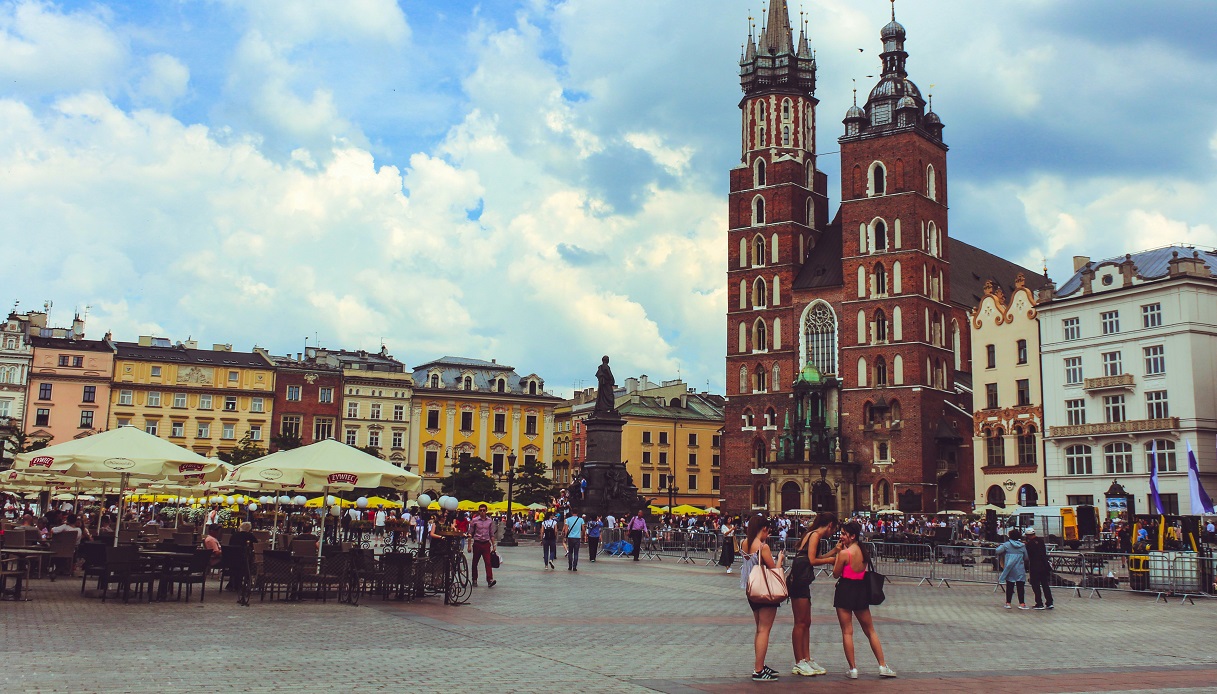
Krakow is currently a city without a leader. Mayor Aleksander Miszalski, elected in 2024, was removed via a referendum last May. Now, Poland’s second-largest city is in the hands of a commissioner pending municipal elections, scheduled for late August or early September. Among the most controversial issues of his administration is the Low Emission Zone (Lez), which has been active since January 2026 and is now hanging in the balance.
We gathered the perspective of someone who follows the matter closely: Filip Jarmakowski, Transport Coordinator for Polski Alarm Smogowy (Polish Smog Alert), an organization that has been fighting for air quality in the country for years.
Krakow: a Lez unlike the others
Krakow’s Low Emission Zone is not comparable to those in other Polish cities. While in Warsaw the Lez covers barely 7% of the urban area, and in Katowice and Szczecin it drops to 1% or less, in Krakow the affected area reaches 60% of the city. Also the requirements are tighter: Euro 4 for petrol vehicles and Euro 6 for diesel.
For the residents, however, a relief valve was provided: anyone who owned a car before July 2025 obtained an indefinite exemption. Therefore, the rule mainly affects visitors from outside the city. Until 2028, it will be possible to enter the zone by paying a fee, whereas from 2029 access will only be allowed for compliant vehicles.
For the time being, the Lez remains in force: “Modifying or abolishing it is not an immediate process – Jarmakowski explains -. Any change legally requires mandatory public consultations, which take at least a month. A complete abolition would require a new referendum.”
Meanwhile, mayoral candidates are already taking a stand. “Some proposals – the activist continues – plan to reduce the size of the zone by including only the historic center, an option that experts say would have little impact on air quality. Others aim to lower the required Euro standards. Total abolition, while technically possible, appears to be the longest and most uncertain path“.
Issues in managing Krakow’s Lez
A few weeks ago, Smog Alert wrote a commentary analyzing the reasons behind the political difficulties of the Lez. The text, written by the organization for internal use, does not spare criticism of the municipality’s management.
The first problem, according to the association, was communication. The rules of the zone were never explained clearly and widespread: many residents, despite being exempted from the requirements, did not know it. “False beliefs were circulating – the document reads -. Some people were convinced that the Lez banned internal combustion vehicles entirely. The city did not invest in ‘ambassadors’ for the measure, such as doctors, scientists, or administrators from other European cities where Low Emission Zones have worked. Smog Alert itself had invited officials from London and Brussels to a meeting in Krakow, but the municipality’s interest was minimal”.
The second sticking point is the lack of support from the central government: “Polish cities have been left alone in implementing Low Emission Zones, without funding or political backing. Compared to places like Katowice or Szczecin, where Lezs only exist on paper, Krakow chose to take it seriously. Precisely for this reason, it became a political target“.
A further critical element was the lack of a coherent transport policy. “When the Lez came into effect – the document continues -, almost all Park & Ride (P+R) parking lots were located within the boundaries of the zone, making them unusable as an alternative to the car. And above all, shortly after introducing the Lez, the municipality increased public transport ticket prices: the stick without the carrot”.
However, not everything went wrong, according to the association: the technical systems for vehicle registration and fee management worked well, as did the citizen assistance service. In the first weeks of January, municipal police patrols checked over 800 cars, recorded 116 violations, and issued several fines. But the contextual mistakes weighed heavier than the operational results.
One referendum, many reasons
Yet, it would be simplistic to attribute the mayor’s fall solely to the Lez. The referendum vote was actually the outcome of widespread discontent: “People – Jarmakowski adds – voted against an increasingly invasive overtourism, nepotism within the administration and rising prices, such as public transport tickets, which were adjusted right as the Low Emission Zone came into effect”.
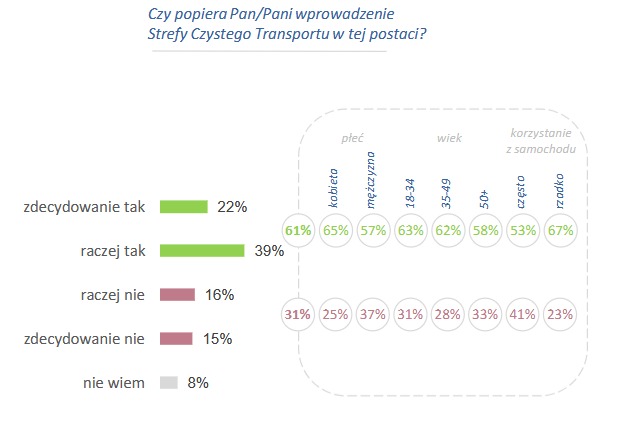
Popular support for the Lez, while not overwhelming, seemed to be prevailing: a poll conducted by Polish Smog Alert in 2023 indicated that between 55% and 61% of Krakow residents were in favour of the introduction of the zone. “No one can know what the majority would think today – the activist explains -. The Lez has now become a political flag and the debate has shifted from air quality to ideological confrontation”.
Regret remains over a management strategy that could have been handled differently. “The introduction of the Low Emission Zone – Jarmakowski ends – took place at a time of price tensions and without adequate preparation of public opinion. A bad timing that risks undermining years of anti-smog battles in one of Europe’s historically most polluted cities“.